

Expert Report Released Recommending Better Muskingum Watershed Water Protections
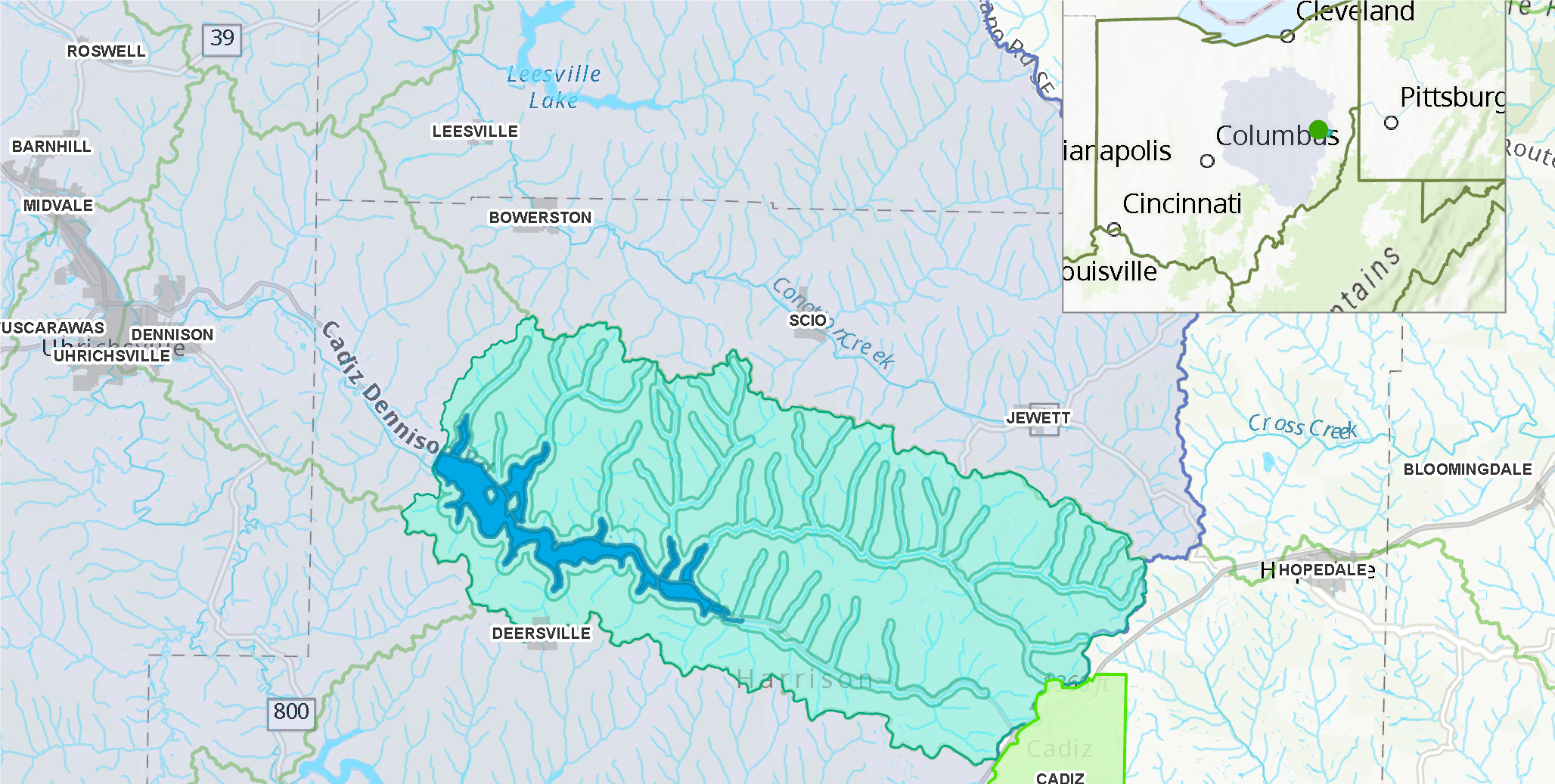
Tappan Lake Watershed
Among the recommendations made in the report, better monitoring for oil and gas-related contaminants were outlined, including continuous monitoring to indicate if a water body was impacted by leaks from injection wells or spills or migration from toxic waste disposal and frack wells. Although toxic and radioactive flowback water is released to the surface during frack well production, about 80% of fracking fluids remain underground to potentially find conduits into reservoirs over time. The potential for such a catastrophic release requires monitoring for early detection.
The report also warns about the loss of environmental flow in the smaller streams that feed the MWCD reservoirs with strong recommendations for stream gage monitoring. A strict water policy to limit consumptive users if monitoring shows that a water body is at risk is needed, especially during droughts and warmer weather that increases evaporation. The report also warns of the cumulative impacts due to the rapid and vast industrialization of the region due to data centers and potentially carbon sequestration which also warrant greater conservation measures.
FracTracker Alliance has issued reports warning about the potential loss of environmental flow which were given to the MWCD in the past. FracTracker’s recent analysis found that from May 2012 through January 2026 the MWCD sold 1.8 billion gallons of freshwater for $7.2 million with an average price of less than .5 cents per gallon. At one time, the MWCD charged 9 cents a gallon, which FreshWater asserts is still too low, especially for consumptive uses like fracking. Clean water is an irreplaceable natural resource, and the MWCD has a fundamental obligation to protect the water within its district for generations to come. Katie Jones, Ohio River Valley Coordinator for FracTracker Alliance. states, “Selling water to fracking operators at a fraction of a cent per gallon undermines that mission and prioritizes an industry that demonstrably threatens regional water security over the interests of the residents of southeastern Ohio."
“We had hoped to present this report to the MWCD Conservancy Court at the annual meeting on June 12, but once again, we were denied the opportunity to testify to present the report,” stated Lea Harper, managing director of FreshWater Accountability Project. “We are concerned that the ruling bodies of the MWCD are not taking adequate measures to provide needed protections for water given to the conservancy district by the US government for recreation, conservation and flood control. The MWCD has taxing authority and has made hundreds of millions of dollars from selling water and leasing reservoirs to be fracked, so there is funding to adequately protect the region’s valuable freshwater. Instead, they are selling the water to be destroyed forever for less than a penny a gallon, giving the fracking industry greater profits from water destruction.”
Continuous water quality and quantity monitoring is crucial in regions with heavy industrial consumption and contamination. John Stolz, Professor Emeritus of Biology at Duquesne University, warned: "Allowing unconventional oil and gas development around and under critical water resources is a disaster waiting to happen. Casing failures, as occurred in the Beaver Run Reservoir, Westmoreland PA, and frac-outs, as happened in New Freeport PA, have demonstrated how easy it is to contaminate a watershed. The damage is forever."
The Downstream Strategies’ report will also be provided to all Ohio legislators and the Ohio EPA in a continuing effort to achieve their attention and action to provide better water protections for the Muskingum watershed. FreshWater continues to assert that the Ohio EPA should evaluate water availability and commission a study for southeast Ohio as was done for the Central Ohio Regional Water Study before more heavy industrial water consumption is permitted in a region that is already stressed. The report recommends what the MWCD can do to help ensure safe drinking water and adequate water supplies for residents and other commercial users. As plans continue to frack Ohio’s state lands and the Wayne National Forest, residents need assurances that there will be clean, abundant water for all private and public uses. The projected consumptive water use by data centers and for carbon sequestration makes strong water protections for the region even more urgent. It is hoped the report’s recommendations will be seriously considered and implemented to proactively protect freshwater quality and quantity in Southeast Ohio.
###
FreshWater Accountability Project was formed in 2012 when unconventional oil and gas development first came to Southeast Ohio. Since then, FreshWater has operated to protect the environment and public health from fracking and toxic, radioactive frack waste processing and disposal. FreshWater advocates for public health through better protections from the cumulative impacts of pollution due to inadequate regulation and oversight of heavy industrial polluters.
The Downstream Strategies report was commissioned by FreshWater with funding provided by the Ohio River Valley Participatory Fund, a program of Nonprofit Partners, Inc.
Leatra J. Harper
FreshWater Accountability Project
+1 419-450-7042
wewantcleanwater@gmail.com
Visit us on social media:
Facebook
Legal Disclaimer:
EIN Presswire provides this news content "as is" without warranty of any kind. We do not accept any responsibility or liability for the accuracy, content, images, videos, licenses, completeness, legality, or reliability of the information contained in this article. If you have any complaints or copyright issues related to this article, kindly contact the author above.
